
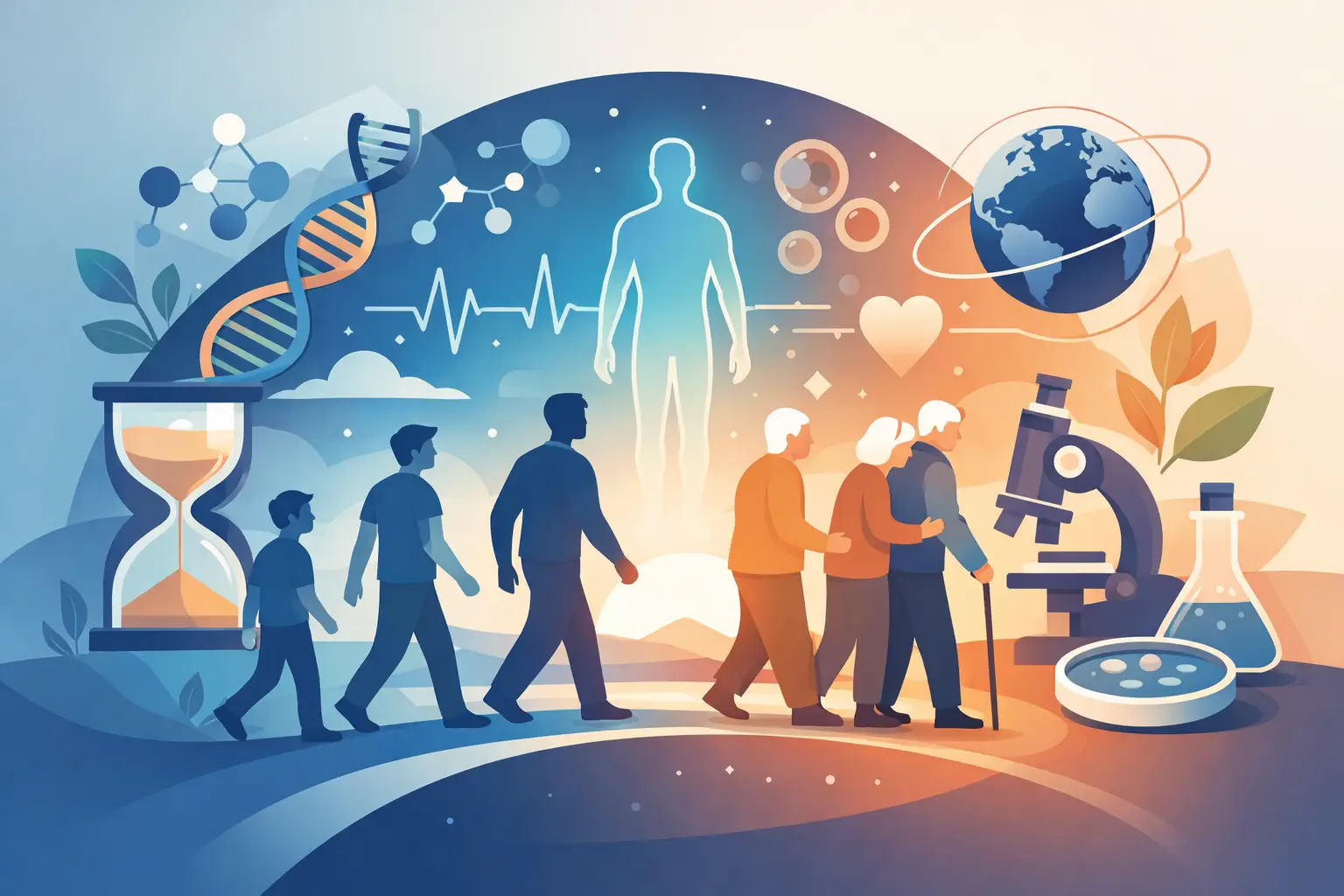
Aging used to be treated like a fixed timeline - something you simply moved through, with genetics doing most of the deciding. Longevity science challenges that idea. If you are asking what is longevity science, the short answer is this: it is the study of how biology ages and how that process may be influenced to extend not just lifespan, but healthspan - the years you stay energetic, resilient, and capable.
That distinction matters. Most people do not want extra years marked by fatigue, decline, and rising dysfunction. They want sharper cognition, stronger recovery, better metabolic performance, and a body that keeps up with ambition. Longevity science sits at the intersection of biotechnology, preventive wellness, systems biology, and personalized optimization to pursue exactly that outcome.
What is longevity science focused on?
At its core, longevity science looks at the mechanisms that drive biological aging. Instead of viewing aging as one single event, it treats aging as a collection of interconnected processes happening across cells, tissues, and organ systems.
Researchers study how mitochondria produce energy over time, how cells respond to stress, how inflammation accumulates, how DNA damage is repaired, and how communication between cells changes with age. They also examine sleep, nutrition, movement, environmental exposures, and recovery capacity because aging is not controlled by one pathway alone.
This is why longevity science feels different from conventional wellness advice. It is less about one-off hacks and more about influencing the underlying terrain of human performance. The question is not just how to feel better this week. It is how to create conditions that support better function over decades.
Lifespan versus healthspan
One of the most useful ways to understand what longevity science is involves separating lifespan from healthspan.
Lifespan is how long you live. Healthspan is how long you live well.
That means a longevity-focused strategy is not automatically about chasing the biggest number possible. In practice, many high-performing adults are more interested in preserving capacity. They want to stay mentally sharp in demanding careers, maintain physical independence later in life, recover well from training and travel, and reduce the drag of low energy, poor sleep, and chronic stress.
This is where the field becomes highly relevant to wellness optimization. If your biology can sustain stronger metabolic flexibility, healthier inflammatory balance, more efficient cellular energy, and better resilience to stress, you are not just adding theory to your life. You are improving the quality of daily performance now while investing in your future baseline.
The biology behind longevity science
Much of the field revolves around a handful of recurring themes.
Cellular energy is one of them. Mitochondria help convert fuel and oxygen into usable energy, and their efficiency influences everything from recovery to cognitive output. As mitochondrial function declines, people may notice reduced stamina, slower repair, and less adaptability.
Inflammation is another major area. Acute inflammation is part of normal defense and repair. Chronic low-grade inflammation is different. Over time, it may contribute to wear across multiple systems, especially when paired with poor sleep, sedentary behavior, excess visceral fat, or ongoing stress.
Then there is cellular repair. DNA damage occurs constantly, but the body has systems to repair it. Protein quality control, autophagy, and other maintenance pathways help keep cells functional. Longevity science is interested in how these repair systems can be supported through lifestyle, environmental inputs, and emerging technologies.
Hormesis also matters. This is the concept that controlled, beneficial stress can make the body more capable. Exercise is the classic example, but so are heat exposure, cold exposure, oxygen variation, and certain metabolic challenges. The right dose can stimulate adaptation. The wrong dose can backfire. That is one reason personalization is so important.
Why personalization matters in longevity
There is no universal longevity protocol because people age differently.
Two people of the same chronological age can have very different metabolic health, recovery capacity, sleep architecture, body composition, and inflammatory burden. One may thrive on aggressive training and intermittent fasting. Another may need more nervous system regulation, better nutrient support, and less physiological strain.
That is why modern longevity science increasingly relies on data. Biomarkers, body composition, recovery signals, sleep quality, and lifestyle patterns offer a clearer view of what a person actually needs. The goal is not to copy a trend from a podcast. It is to identify leverage points that can move biology in a favorable direction.
For a premium wellness audience, this is often the turning point. Generic health advice tends to plateau. Personalized optimization creates more precise decisions around recovery, nutrition, supplementation, and advanced wellness therapies.
What longevity science is not
It is not a promise of immortality. It is not a shortcut around foundational habits. And it is not purely about expensive gadgets.
The field attracts excitement for good reason, but there is a trade-off between innovation and hype. Some interventions have strong mechanistic rationale but limited long-term human outcome data. Others are better supported, but still depend heavily on context, dosage, timing, and individual response.
That does not make the field less credible. It makes it more nuanced. The most sophisticated view of longevity science is not blind optimism or blanket skepticism. It is strategic curiosity grounded in evidence, outcomes, and biological individuality.
Where advanced wellness fits in
This is where longevity science starts to move from concept to application. Once the goal becomes improving healthspan and cellular performance, the conversation naturally expands beyond basic wellness.
Advanced wellness modalities are often used to support recovery, resilience, circulation, mitochondrial function, stress adaptation, and systemic efficiency. Depending on the person and protocol, that may include interventions such as photobiomodulation, contrast therapy, hyperbaric oxygen, molecular hydrogen, or magnetic stimulation approaches designed to promote adaptive response at the cellular level.
These modalities are not magic on their own. Their value depends on how they fit into a broader strategy that includes movement, sleep, nutrition, nervous system regulation, and consistent measurement. Used well, they can act as force multipliers. Used poorly, they become expensive distractions.
That is why a Medicine 4.0 mindset matters. Instead of waiting for decline to become obvious, this approach looks for earlier opportunities to optimize biological function and create more resilient systems over time. At Axtra Health, that philosophy is central to how advanced wellness is framed - not as indulgence, but as a proactive investment in vitality.
The real-world goals of longevity science
For most people, the benefits are not abstract. They show up in performance, recovery, and how you feel across a demanding schedule.
A longevity-informed strategy may aim to improve energy stability, support metabolic efficiency, preserve muscle and cognitive function, reduce the burden of chronic inflammation, and enhance your capacity to adapt to stress. Those outcomes can influence everything from athletic performance to executive focus to how well you age into later decades.
It also changes the timeline of health decisions. Instead of asking, "What do I do once something is wrong?" you begin asking, "What can I strengthen now so future decline is less likely and less severe?"
That shift is powerful because it moves wellness out of a reactive model and into an intentional one.
Is longevity science worth paying attention to now?
Yes, but with discernment.
The field is advancing quickly because the tools are improving. Biomarker analysis is more accessible. Wearables offer more continuous feedback. Research on aging biology is expanding. Consumer interest in proactive health has also matured. People are no longer satisfied with broad advice that ignores individual physiology.
At the same time, not every claim deserves equal trust. If a protocol sounds dramatic but ignores fundamentals, be cautious. If a brand talks about longevity without addressing sleep, metabolic health, muscle, stress, and recovery, it is probably selling aesthetics more than outcomes.
The strongest longevity strategies are rarely flashy. They are precise, consistent, and layered. They combine foundational behaviors with targeted interventions that match your biology, goals, and stage of life.
What is longevity science ultimately trying to do?
At its best, longevity science is trying to change the experience of aging.
Not by pretending time stops, but by helping the body maintain higher function for longer. It asks whether we can improve the way cells produce energy, recover from stress, regulate inflammation, and preserve resilience as the years pass. It treats aging as a dynamic process that can be influenced, not just endured.
For ambitious, health-conscious adults, that makes longevity science more than a scientific curiosity. It becomes a framework for living with intention. When you understand your biology and act early, you gain more than extra years on paper. You create better odds of staying strong, clear, and fully engaged in the life you are building.
The most compelling part is not the promise of living forever. It is the possibility of feeling more alive for much longer.